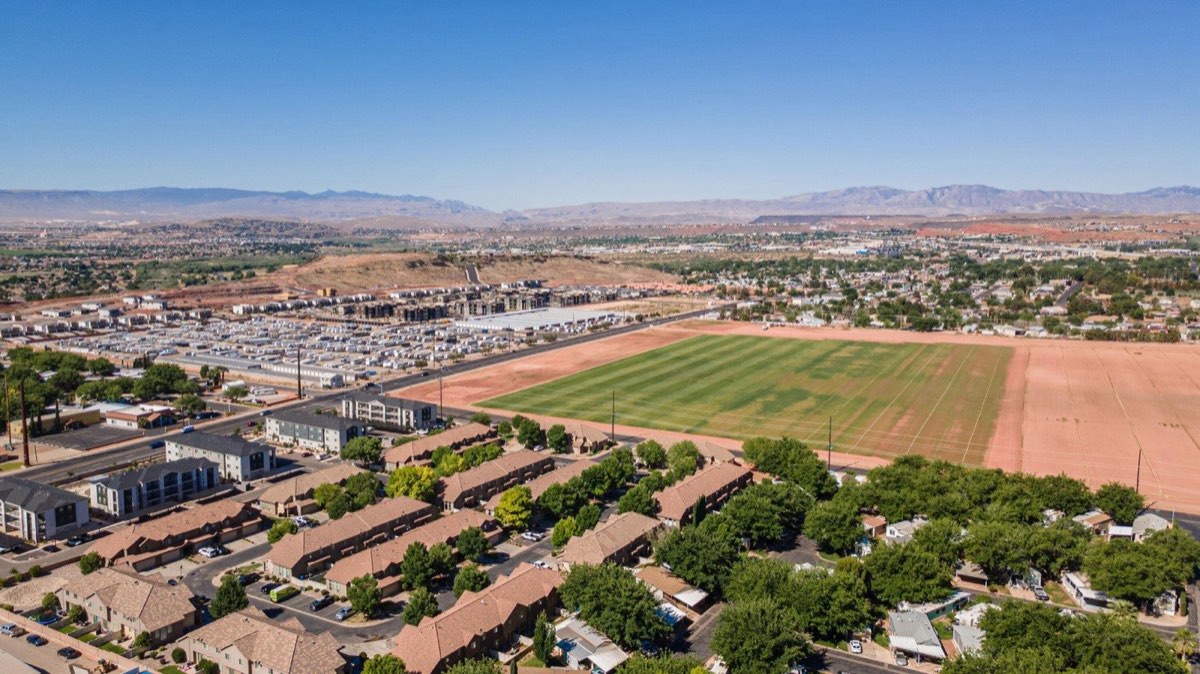
New homes are everywhere in Southern Utah, from Desert Color and Little Valley in St. George to Washington, Hurricane and Sand Hollow. Buying from a builder is different from buying a resale home, though. Here's what to know about builder contracts, incentives, timelines and inspections, and why you should bring your own agent from your very first visit.
How much new construction is there?
A lot. On November 10, 2026, about half of Hurricane's active residential listings, 39% of Washington's, 37% of Ivins' and 18% of St. George's were built in 2025 or later. In resort communities still being built out, the share was higher: more than half of the active listings in Desert Color and Sand Hollow. MLS data via Flexmls; deemed reliable but not guaranteed.
Three ways to buy new
- Quick move-in (inventory) homes: finished or nearly finished homes you can close on in weeks; less choice, but often the best incentives
- Homes under construction: you may still pick some finishes, and you'll close in a few months
- To-be-built homes: you choose the lot, floor plan and finishes, and wait for construction, often six months to a year or more depending on the builder and the season
How builder contracts differ
Resale homes in Utah are usually bought with the state-approved Real Estate Purchase Contract (REPC), which gives buyers clear deadlines and protections. Many builders use their own purchase agreement instead, written by the builder's attorneys to protect the builder. Before you sign, it's worth knowing what's commonly different:
- Earnest money: deposits are often larger, and may become non-refundable sooner, sometimes right away
- Upgrade deposits: money paid for design selections is usually non-refundable
- Completion dates: builders typically give an estimated date, with broad rights to delay without penalty
- Changes: the builder may be able to substitute materials or make changes of similar quality
- Your remedies: some contracts limit what you can recover or require arbitration if there's a dispute
- Appraisal and financing: ask what happens if the home appraises below the price or your loan falls through
Why bring your own agent
The friendly sales consultant in the model home works for the builder. Your own agent works for you: comparing builders and communities, explaining the contract, negotiating incentives and upgrades, recommending independent inspectors, and keeping the builder on track through closing.
Many builders require your agent to register you, or come with you, on your very first visit to a community, or they may decline to work with an agent later. So call Danielle before you tour model homes. Many builders also offer to pay the buyer's agent; your written buyer agreement spells out compensation, and Danielle confirms the builder's terms in writing before you sign anything.
Choosing a builder
Builders vary in quality, communication and how they handle warranty claims. Before you commit, tour finished homes (not just models), ask neighbors in a builder's earlier phases about their experience, and look up the builder's licensing and reviews. Ask how long the builder has worked in Southern Utah, which features are standard versus upgrades, and how warranty requests are handled. Danielle can share what she's seen working with local builders.
Builder incentives and how to compare them
Builders often offer incentives instead of cutting prices, especially on quick move-in homes. Common incentives include interest rate buydowns (temporary or permanent), closing cost credits, design-center credits and included upgrades like window coverings or landscaping. Many are tied to the builder's preferred lender or title company.
Compare offers by their real dollar value. A permanent rate buydown can save more over time than a price cut, but only if you keep the loan; a price reduction lowers your property taxes and helps if the home doesn't appraise. Get a quote from an outside lender too, so you can see whether the preferred lender's rate and fees are truly a better deal.
What's included, and what isn't
- Lot premiums: view, corner and larger lots usually cost extra
- Landscaping and fencing: front yards are often included; backyards frequently are not
- Window coverings, appliances and garage finishes: check the standard features list
- HOA: ask for the budget and CC&Rs, and whether dues will rise as the community fills in
- Future construction: ask what's planned next to your lot, and for how long you'll live near active building
Inspections still matter
A brand-new home can still have problems, and city inspections only check that minimum codes are met. Hire your own licensed inspector at key stages:
- Pre-drywall: after framing, plumbing and wiring are in, while everything is still visible
- Final: before your final walkthrough, so the builder can fix items before closing
- Before the warranty ends: around month 11, so issues are reported while still covered
Warranties
Most builders offer a limited warranty, often one year for workmanship and materials, with longer coverage for major systems and structural components. Read the warranty document before you sign, learn how to submit claims, and keep a running list of small items to report together. Manufacturer warranties on appliances, roofing and HVAC equipment are usually separate.
A typical timeline for a to-be-built home
- Week 1: tour communities with your agent, choose a lot and floor plan, and sign the purchase agreement
- Weeks 2 to 6: design-center selections and loan application
- Months 2 to 9 or more: construction, with a pre-drywall inspection and builder updates
- Final weeks: final inspection, walkthrough, appraisal and closing
Common mistakes to avoid
- Visiting a model home before calling your agent, and losing the chance to have representation
- Signing the builder's contract without reading the deposit and delay terms
- Overspending at the design center on upgrades that won't add resale value
- Skipping independent inspections because the home is new
- Assuming you can rent the home nightly without checking city and HOA rules
How Danielle helps new construction buyers
Danielle helps you compare builders, communities and incentives across St. George, Washington, Hurricane and Ivins, reviews the contract and HOA documents with you, negotiates where there's room, and coordinates inspections and the walkthrough. If you're relocating, she can register you with builders, preview homes and send video updates during construction.
Frequently Asked Questions
Do I need a real estate agent to buy a new construction home?
You don't have to have one, but it's wise. The builder's sales consultant represents the builder, while your agent represents you, and many builders offer to pay the buyer's agent. Bring your agent on your first visit, since many builders require it.
Can I negotiate with a builder in St. George?
Often, yes. Builders may be more flexible on incentives, closing costs, upgrades or lot premiums than on the base price, especially for quick move-in homes.
How long does it take to build a new home in St. George?
A to-be-built home often takes six months to a year or more depending on the builder and the season. Quick move-in homes can close in a few weeks.
Should I get an inspection on a new construction home?
Yes. Hire your own inspector for a pre-drywall inspection, a final inspection before closing, and a warranty inspection around month 11.
Are builder contracts the same as a regular Utah purchase contract?
Often not. Many builders use their own agreement instead of the state Real Estate Purchase Contract, with different deposit, delay and dispute terms, so review it carefully before you sign.